
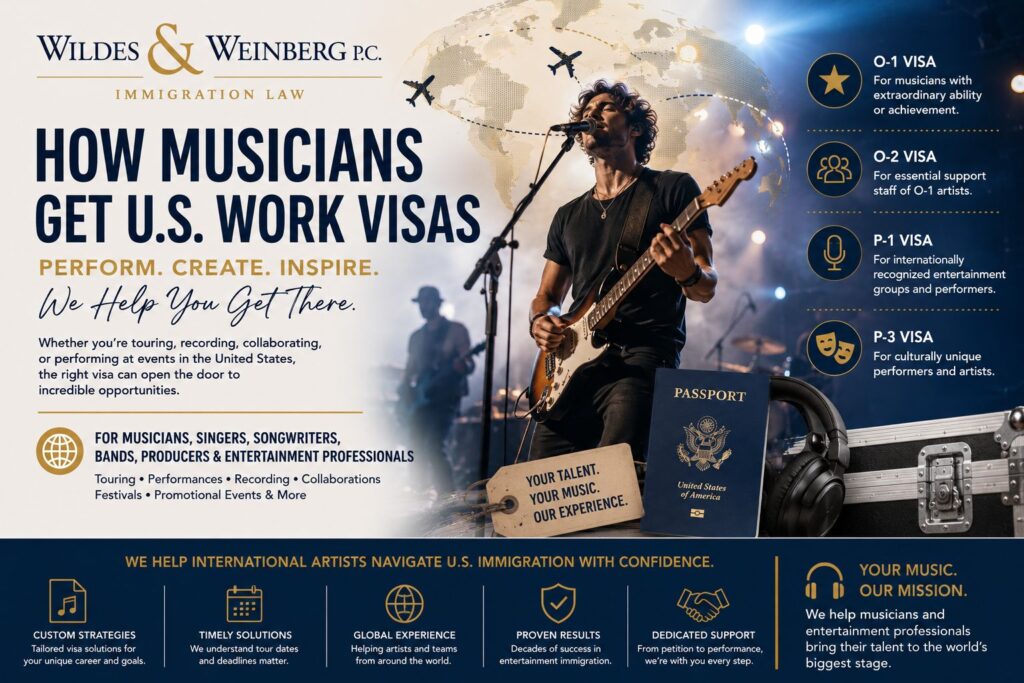
For musicians around the world, performing in the United States can represent a major milestone in their careers. Whether it involves touring, recording, collaborating with American artists, performing at festivals, or attending promotional events, entering the U.S. as a professional artist often requires the proper immigration strategy.
At Wildes & Weinberg P.C., we regularly assist singers, songwriters, DJs, bands, producers, composers, touring crews, and entertainment professionals seeking authorization to work in the United States. One of the most common questions artists ask is simple:
“How do musicians get U.S. work visas?”
The answer depends on the artist’s background, accomplishments, upcoming performances, and long-term goals.
Can Musicians Work in the United States on a Tourist Visa?
Generally, no.
Many artists are surprised to learn that performing professional services in the United States, including paid performances, tours, appearances, or promotional activities, may require a proper work-authorized visa.
Attempting to enter the U.S. as a tourist while planning professional performances can create serious immigration issues, including denied entry, visa cancellation, or future travel complications.
Because of this, international artists should carefully evaluate their immigration options before traveling.
What Visa Do Musicians Use to Perform in the U.S.?
Several visa categories may apply to musicians and entertainment professionals. The most common include:
O-1 Visa for Extraordinary Ability
The O-1 visa is often used by individual artists who have achieved distinction within the music industry.
This category may apply to:
- singers,
- songwriters,
- DJs,
- producers,
- composers,
- solo performers,
- conductors,
- and other music professionals with significant recognition.
An O-1 visa may be appropriate for artists who can demonstrate:
- press coverage,
- chart success,
- streaming achievements,
- major performances,
- awards or nominations,
- collaborations with notable artists,
- industry recognition,
- or substantial commercial success.
Importantly, an artist does not need to be a global superstar to qualify.
Many successful independent musicians, touring artists, and digital creators may potentially qualify based on the strength of their professional accomplishments.
O-2 Visas for Essential Support Personnel
Artists touring the United States often travel with critical support staff.
The O-2 visa may apply to individuals who play an essential role in supporting an O-1 artist’s performance or production.
Examples may include:
- tour managers,
- DJs,
- lighting designers,
- choreographers,
- sound engineers,
- production staff,
- or creative collaborators.
For touring artists, properly structuring both O-1 and O-2 petitions can be extremely important.
P Visas for Bands and Entertainment Groups
Certain performers may qualify under the P visa category instead.
For example:
- the P-1 category may apply to internationally recognized entertainment groups,
- while the P-3 category may apply to culturally unique performers and artists.
These categories are commonly used for:
- bands,
- performance groups,
- traditional musicians,
- international cultural performers,
- and touring productions.
Determining whether an artist should pursue an O visa or P visa often depends on the structure of the act, the artist’s recognition, and the nature of the performances in the United States.
What Evidence Helps Musicians Qualify for U.S. Work Visas?
Every case is different, but immigration petitions for musicians often include evidence such as:
- press articles and interviews,
- Spotify and streaming statistics,
- chart rankings,
- festival appearances,
- touring history,
- award nominations,
- record label agreements,
- management contracts,
- social media engagement,
- collaborations with recognized artists,
- ticket sales,
- expert recommendation letters,
- or evidence of commercial success.
For emerging artists, presentation and strategy are often just as important as raw fame.
Many musicians underestimate the strength of their credentials until their achievements are properly organized within the legal framework immigration officers use to evaluate petitions.
Can Independent Artists Qualify?
Short answer: Yes.
One of the biggest misconceptions in entertainment immigration is that only mainstream celebrities qualify for work visas.
In reality, independent musicians, viral artists, online creators, niche performers, and developing talents may still have strong cases depending on:
- audience reach,
- professional recognition,
- touring activity,
- collaborations,
- media attention,
- and overall career trajectory.
Today’s music industry looks very different than it did even ten years ago. Streaming platforms, social media, YouTube, TikTok, and global digital distribution have transformed how artists build careers and audiences.
Immigration law has increasingly evolved alongside those changes.
Common Immigration Problems Musicians Face
International artists frequently encounter issues such as:
- last-minute tour planning,
- visa appointment delays,
- Requests for Evidence (“RFEs”),
- difficulty proving upcoming work,
- prior visa denials,
- border questioning,
- or confusion about which visa category applies.
Timing can also be critical.
Artists often begin planning tours, performances, or collaborations before realizing how long the immigration process may take. Early preparation can make a significant difference when navigating U.S. work visa applications.
How Long Does It Take to Get a Music Visa?
Processing times vary depending on the visa category, government backlogs, and whether premium processing is available.
In some cases, expedited processing may be possible.
However, artists planning tours, festivals, or major performances should ideally begin the immigration process as early as possible to avoid disruptions.
Choosing the Right Immigration Strategy
No two entertainment careers are identical.
A touring DJ may require a different strategy than:
- a songwriter relocating to Los Angeles,
- an international band preparing for a U.S. tour,
- a viral TikTok musician,
- or a producer collaborating with American artists.
Choosing the appropriate visa category requires careful analysis of the artist’s background, goals, timeline, and supporting evidence.
U.S. Immigration for Musicians, Singers, and Artists
As the entertainment industry becomes increasingly global, more international musicians are seeking opportunities in the United States than ever before.
From major festivals and arena tours to recording sessions and content creation, the U.S. remains one of the world’s most important markets for artists and performers.
At Wildes & Weinberg P.C., our team regularly works with musicians, singers, entertainers, creators, athletes, and public figures navigating complex immigration matters.
For artists seeking to perform, create, tour, or expand their careers in the United States, understanding the available visa options can be one of the most important steps toward long-term success.
If you have any questions, contact us at josh@wildeslaw.com.