
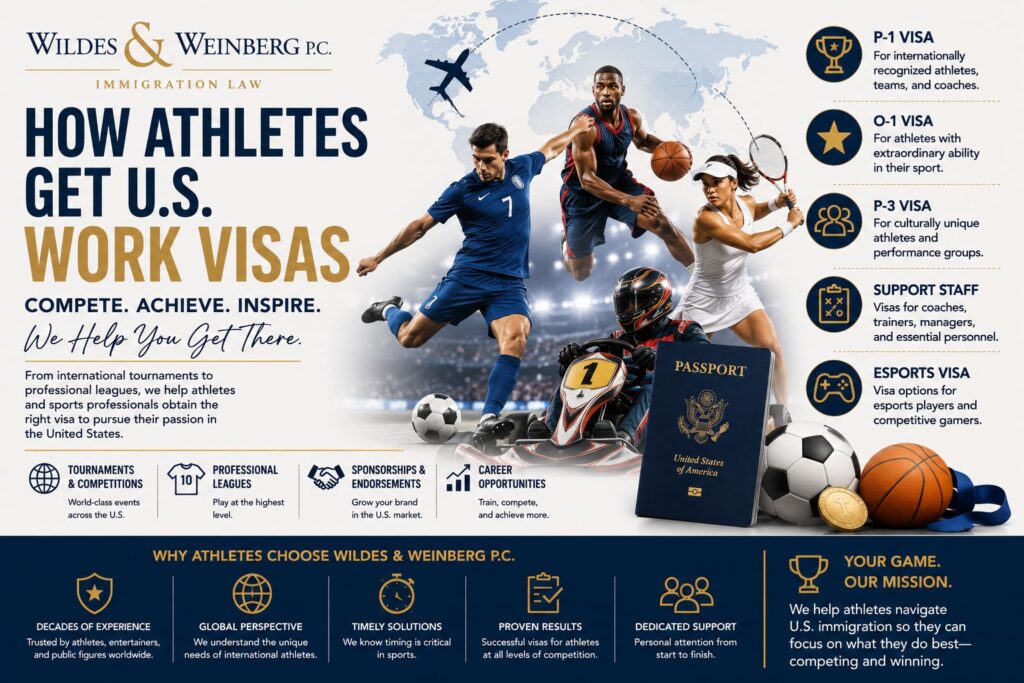
For athletes around the world, competing in the United States can represent a major step in their professional careers. From international tournaments and professional leagues to training camps, sponsorships, and endorsement opportunities, the United States remains one of the most important destinations in global sports.
However, many athletes are surprised to learn that entering the U.S. for competitions, events, or professional activities often requires the proper immigration strategy.
At Wildes & Weinberg P.C., we regularly assist athletes, coaches, esports competitors, trainers, agents, and sports organizations navigating complex U.S. immigration matters. One of the most common questions we receive is:
“How do athletes get U.S. work visas?”
The answer depends on the athlete’s level of recognition, the nature of the competition, the structure of the team or organization, and the athlete’s long-term goals in the United States.
Can Athletes Compete in the U.S. on a Tourist Visa?
Possibly, but in most situations, no.
Professional competitions, paid appearances, sponsorship activities, media obligations, training arrangements, and organized sporting events may require proper work-authorized immigration status.
Attempting to enter the United States as a tourist while planning professional athletic activities can create serious immigration consequences, including denied entry, visa cancellation, or future travel complications.
Because of this, athletes and sports organizations should evaluate visa options carefully before international travel.
What Visa Do Athletes Use to Compete in the United States?
Several visa categories may apply to athletes and sports professionals. The most common include:
P-1 Visa for Internationally Recognized Athletes
The P-1 visa is one of the most commonly used categories for athletes competing in the United States.
This category may apply to:
- professional athletes,
- internationally recognized athletes or teams,
- and certain athletic support personnel.
Athletes seeking P-1 visas often include evidence such as:
- international rankings,
- league participation,
- tournament results,
- media coverage,
- sponsorships,
- prize winnings,
- or contracts with professional organizations.
The P-1 category is frequently used for:
- professional sports leagues,
- international tournaments,
- esports events,
- combat sports,
- tennis competitions,
- soccer players,
- basketball players,
- fighters,
- and other elite athletic activities.
O-1 Visas for Extraordinary Ability Athletes
Certain athletes may also qualify for O-1 visas based on extraordinary ability.
The O-1 category is generally reserved for individuals who have achieved sustained national or international acclaim within their sport.
Examples of supporting evidence may include:
- major championships,
- Olympic participation,
- professional rankings,
- substantial media recognition,
- endorsements,
- awards,
- contracts,
- or significant professional achievements.
Importantly, athletes do not necessarily need to be global superstars to qualify.
Many highly accomplished professionals competing at elite levels may potentially qualify based on the strength of their athletic credentials and recognition within their sport.
Visas for Coaches, Trainers, and Support Staff
International sporting events often involve more than just the athletes themselves.
Depending on the circumstances, coaches, trainers, analysts, physiotherapists, managers, and other essential personnel may also require immigration authorization to accompany athletes or teams to the United States.
Choosing the proper immigration strategy for both athletes and support staff is often critical to ensuring smooth travel and event participation.
Can Esports Players Qualify for U.S. Work Visas?
Yes.
As esports continues to grow globally, many professional gamers and streamers now travel to the United States for:
- tournaments,
- team activities,
- sponsorship events,
- streaming collaborations,
- and promotional appearances.
Depending on the player’s accomplishments and role, esports competitors may qualify for:
- P-1 visas,
- O-1 visas,
- or related support categories.
The intersection between immigration law and competitive gaming has grown significantly in recent years as esports has evolved into a major international industry.
What Evidence Helps Athletes Qualify?
Every case is different, but athletic visa petitions often include:
- competition history,
- rankings,
- press coverage,
- awards,
- league participation,
- contracts,
- sponsorship agreements,
- endorsement deals,
- expert recommendation letters,
- statistics,
- prize winnings,
- or evidence of international recognition.
For younger or emerging athletes, strategic presentation can be especially important.
Many athletes underestimate the strength of their accomplishments until they are properly organized and presented within the legal framework immigration officers use when evaluating petitions.
Common Immigration Problems Athletes Face
Athletes and sports organizations frequently encounter issues such as:
- urgent competition timelines,
- visa appointment delays,
- last-minute tournaments,
- Requests for Evidence (“RFEs”),
- border inspections,
- prior visa denials,
- or confusion regarding which visa category applies.
Timing can be particularly important in sports immigration matters.
Missed deadlines or delays can impact:
- competitions,
- contracts,
- sponsorship obligations,
- or entire seasons.
Because of this, athletes often benefit from beginning the immigration process as early as possible.
How Long Does It Take to Get an Athlete Visa?
Processing times vary depending on:
- the visa category,
- government backlogs,
- event timing,
- and whether premium processing is available.
In urgent situations, expedited strategies may sometimes be possible depending on the circumstances.
However, athletes preparing for tournaments, league seasons, or international events should ideally plan well in advance.
Choosing the Right Immigration Strategy
No two athletic careers are identical.
An Olympic athlete may require a very different immigration strategy than:
- an esports competitor,
- a professional soccer player,
- a touring combat sports athlete,
- a tennis player competing in U.S. tournaments,
- or a coach joining an American organization.
Selecting the appropriate visa category depends heavily on the athlete’s accomplishments, competition schedule, support structure, and long-term goals in the United States.
U.S. Immigration for International Athletes and Sports Professionals
Sports have become increasingly global, with athletes regularly competing, training, and building careers across international borders.
From major tournaments and professional leagues to esports competitions and endorsement opportunities, the United States continues to play a central role in the global sports industry.
At Wildes & Weinberg P.C., our team regularly works with athletes, entertainers, creators, musicians, public figures, and sports organizations navigating complex immigration matters.
For athletes seeking to compete, train, perform, or expand their careers in the United States, understanding the available visa options can be one of the most important steps toward long-term professional success. If you have any questions, you may contact us at josh@wildeslaw.com.