
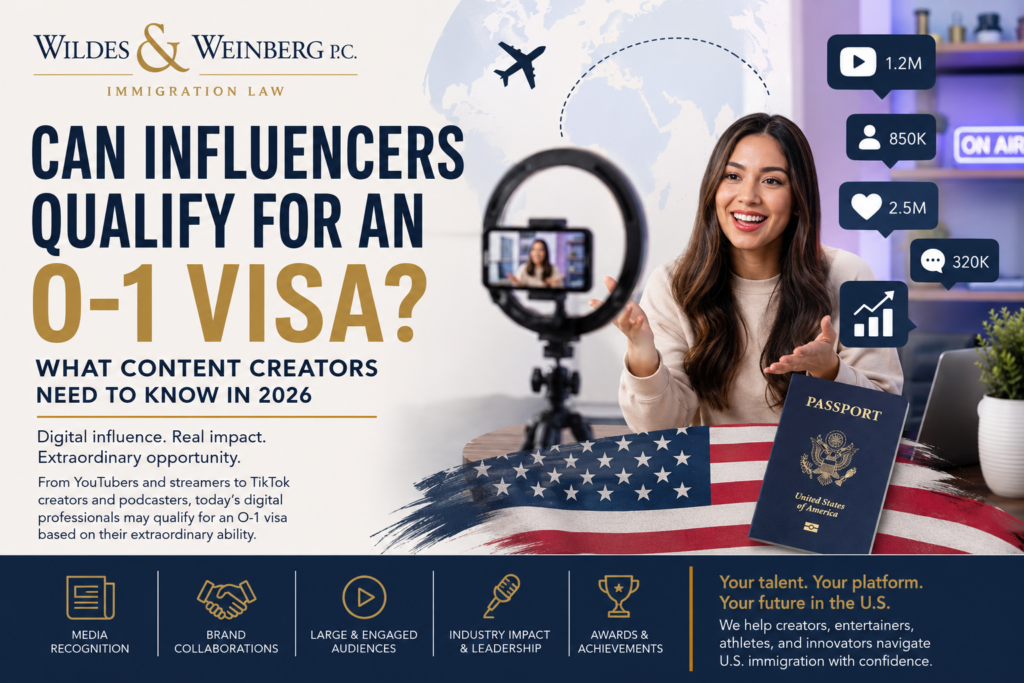
For years, O-1 visas were commonly associated with movie stars, professional athletes, and internationally recognized musicians. Today, however, the digital landscape has transformed what it means to have “extraordinary ability.”
Influencers, streamers, YouTubers, podcasters, esports personalities, and other online creators are increasingly building businesses and audiences that rival traditional celebrities in both reach and commercial impact. As a result, many content creators may qualify for O-1 visas based on their achievements in the digital media space.
At Wildes & Weinberg, we regularly work with artists, entertainers, creators, and digital personalities navigating complex U.S. immigration matters. One of the most common misconceptions we encounter is the belief that influencers cannot qualify for extraordinary ability visas. In reality, many creators may have stronger cases than they realize.
What Is an O-1 Visa?
The O-1 visa is a temporary work visa available to individuals who possess extraordinary ability in their field. Depending on the applicant’s profession, the visa may apply to individuals in the sciences, business, education, athletics, or the arts, including the entertainment industry.
For creators and influencers, the O-1B category, which is reserved for individuals with extraordinary ability in the arts or extraordinary achievement in the motion picture or television industry, is often the most relevant.
Unlike some employment-based visas, the O-1 is designed for individuals who have achieved a level of distinction and recognition within their profession.
Can Influencers Really Qualify?
Yes! And increasingly, they do.
Modern creators are often entrepreneurs, entertainers, marketers, producers, and public figures all at once. USCIS has gradually adapted to the realities of the digital economy, where online influence can carry substantial professional and commercial significance.
An influencer does not need to be a household name to qualify. Instead, immigration officers evaluate whether the individual has achieved sustained recognition or distinction within their area of expertise.
This may include:
- significant audience engagement,
- media recognition,
- major brand collaborations,
- commercial success,
- industry awards,
- live appearances,
- judging or mentoring roles,
- or other evidence demonstrating professional acclaim.
Importantly, there is no minimum follower requirement written into immigration law.
What Evidence Can Help an Influencer O-1 Visa Case?
Every O-1 case is different, but influencers and creators often rely on a combination of traditional and modern forms of evidence.
Examples may include:
- published articles or media coverage,
- podcast or interview appearances,
- sponsorship agreements,
- social media analytics,
- monetization records,
- brand partnerships,
- speaking engagements,
- tournament participation,
- live performances,
- agency representation,
- judging work,
- testimonials from industry experts,
- or evidence of substantial audience reach.
For many creators, one of the biggest challenges is translating online success into the type of evidence immigration officers understand and recognize. A well-prepared petition should clearly explain not only audience size, but also the creator’s impact, recognition, and standing within their field.
Does Follower Count Matter?
Follower count can certainly help, but context matters more than raw numbers alone.
For example, a creator with a highly engaged niche audience, strong monetization history, and significant industry recognition may have a stronger case than someone with a larger but less influential following.
USCIS generally evaluates the totality of the evidence rather than relying on any single metric.
What Types of Creators May Qualify?
A wide range of digital professionals may potentially qualify for O-1 visas, including:
- YouTubers,
- TikTok creators,
- Twitch streamers,
- esports personalities,
- podcasters,
- DJs,
- fitness influencers,
- fashion creators,
- travel influencers,
- comedians,
- educators,
- gaming personalities,
- and more.
As digital careers continue evolving, immigration law is increasingly intersecting with industries that barely existed a decade ago.
Common Challenges for Influencer O-1 Cases
Despite growing recognition of digital creators, influencer O-1 petitions can still face unique challenges.
Some common issues include:
- limited traditional press coverage,
- difficulty proving extraordinary ability,
- inconsistent income documentation,
- demonstrating upcoming work in the United States,
- or responding to Requests for Evidence (“RFEs”) from USCIS.
Creators who are highly recognizable online may still need help translating that success into the legal framework immigration officers use when evaluating petitions.
Because of this, strategy and presentation are often just as important as the evidence itself.
O-1 Visa vs. Other Visa Options
Depending on the creator’s background and goals, other visa options may also be relevant.
For example:
- the P-1 visa may apply to certain esports athletes or entertainment groups,
- while the EB-1 category may provide a long-term pathway toward permanent residence for highly accomplished individuals.
Determining the appropriate strategy often depends on the creator’s career trajectory, travel needs, and long-term goals in the United States.
The Growing Intersection Between Immigration and Digital Media
The entertainment industry no longer exists solely in film studios, television networks, or concert venues. Today, creators can build global audiences directly from their phones, computers, and streaming platforms.
As a result, immigration law is continuing to evolve alongside the creator economy.
Influencers, streamers, and digital personalities may have more viable immigration options than they realize, particularly when their work demonstrates sustained professional recognition and meaningful impact within their industry.
For creators considering opportunities in the United States, understanding those options early can make a significant difference in long-term planning and success.
If you have any questions, feel free to reach out to us today at josh@wildeslaw.com.