Every year, millions of people come to the United States for a short stay. Some are here to see family, others to explore the country as tourists, and many to attend a business meeting, a conference, or an industry event. For most of them, that trip begins with a visitor’s visa.
The process sounds simple on paper. In practice, a visitor visa application might require you to clearly and convincingly prove your intentions to a U.S. consular officer, often in a brief interview that leaves little room for error.
AtWildes & Weinberg, P.C., our visitor visa lawyers help individuals, families, and business travelers prepare visitor visa applications that present their situation honestly and effectively, in line with U.S. immigration law.
A visitor’s visa covers a wide range of people with different reasons for coming to the United States.
We work with:
Some clients need a visa for a single, well-defined trip. Others travel to the U.S. often and want a smoother, better-documented process. Every situation starts from a slightly different place, and the approach should reflect that.
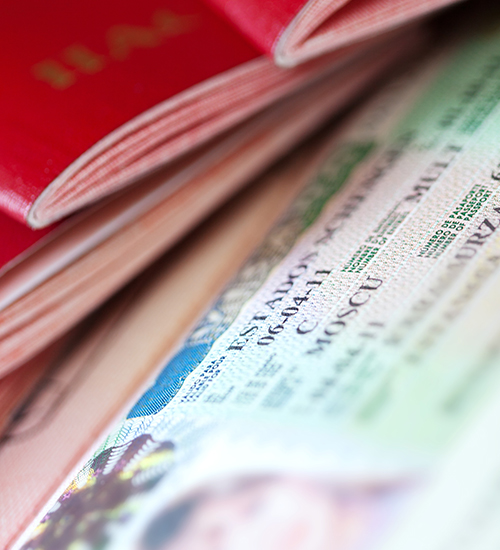
A visitors visa is a non-immigrant visa for people entering the United States temporarily. It comes in two main forms, and they are often issued together as a combined B-1/B-2 visa.
Business visitors are issued a B-1 visa. These can involve meetings, contract negotiations, conferences, and so on, and are any business activities that are suitable. It does not allow work in the United States or payment by a U.S. employer for work done in the United States. Our B1 visa attorney has helped many clients get this visa. The B-2 visa is for tourism and personal travel. That includes vacations, visiting family and friends, and seeking medical care.
One key detail that often causes confusion among applicants is that a visitor visa requires non-immigrant intent. In other words, you have to show that you plan to return home when your visit ends. Consular officers look closely at your ties abroad, such as employment, family, and property, to assess that intent.
Citizens of certain countries may be eligible to travel under the Visa Waiver Program with an approved ESTA, generally for stays of up to 90 days. Whether that applies to you depends on your nationality and your travel history.
A visitors visa can look like a formality, but a refusal is stressful and makes future travel harder. A few mismatched details, a gap in your paperwork, or a travel purpose that isn’t clearly explained can all raise questions at the consular interview.
Our B1 visa lawyers have spent decades handling consular and nonimmigrant cases, from simple visits to harder ones involving past refusals or complicated personal histories.
We help you organize your documents, anticipate the questions an officer may ask, and present your circumstances in a way that is both accurate and easy to understand.
The goal is never to overstate a case. It is to make sure your actual situation is presented clearly so it can be evaluated fairly.
No two applications follow exactly the same path. And our business visitor attorneys understand that. Our process involves these recognizable steps.
Anyone may apply, but approval depends on individual circumstances and the ability to demonstrate non-immigrant intent. Whether you can use ESTA depends on your country of nationality.
No. A visitor’s visa does not authorize employment in the United States.
The length of admission is determined by the officer at the port (and is not assured) and is usually for a period of up to six months (or 90 days for those on ESTA).
A prior refusal does not necessarily prevent a future approval, but it should be addressed carefully.
Planning a trip to the United States for tourism, family, business, or medical care? Thoughtful preparation can make a real difference in how your application is received.
Our visitor visa attorneys at Wildes & Weinberg P.C. are available to review your situation, explain your options, and help you put your best case forward.